Deborah Stratman’s films begin with questions and rarely proceed in straight lines.
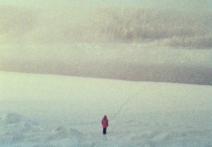
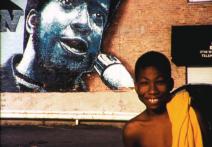
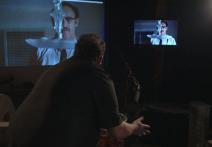
For more than three decades, Stratman has worked across documentary, experimental film, archival material, sound and speculative forms, following questions of power, belief, technology, landscape and the production of knowledge. This month, we expand her collection on DAFilms with five newly added works: Last Things, Laika, Vever (for Barbara), Otherhood and For the Time Being, and revisit them alongside films from across her career.
Stratman has described herself as “an associative thinker and a believer in quotation, a collagist.” (IDA, 2024) She approaches filmmaking as a kind of dig: gathering images, texts, recordings and ideas, allowing unexpected connections to redirect the work. It is an approach that also explains her suspicion of straightforward chronology. A film may reach us in a fixed sequence, but our experience of it—the associations, memories and questions it produces—rarely behaves so obediently.
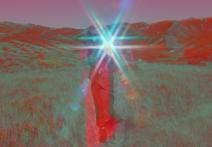
Last Things takes this thinking to an extraordinary scale. Combining geology, microbiology, cosmology, science fiction and speculative thought, the film considers the history and possible futures of the Earth from a perspective in which humanity is no longer the obvious centre. Rocks and minerals become protagonists; scientific knowledge encounters fiction; microscopic processes sit alongside stretches of deep time. Stratman asks what other kinds of history we might pay attention to, and which forms of knowledge are preserved, legitimised or forgotten.
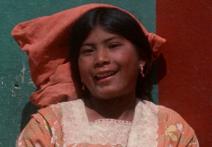
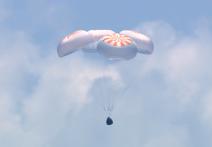
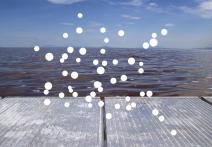
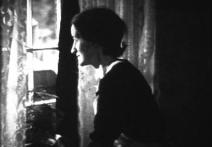
The newly added shorts also reveal Stratman’s interest in artistic dialogue and inheritance. Vever (for Barbara) brings together unfinished footage shot by Barbara Hammer in Guatemala with the writings of Maya Deren, allowing one artist’s abandoned material to enter into conversation with another’s ideas. For the Time Being takes the form of a video letter to land artist Nancy Holt, shaped by their shared fascination with terminal lakes, framed views, monuments and time. Laika, meanwhile, was made in collaboration with composer Olivia Block, paying tribute to the animals sent into space in the name of human progress. In Otherhood, texts by Audre Lorde, Adrienne Rich and Lucille Clifton become part of a compact meditation on motherhood and otherness.
Seen alongside the films already available on DAFilms, these new additions make the remarkable range of Stratman’s practice even more apparent. Her subjects may extend from surveillance and national mythologies to geology, animals, cinema itself or the distant life of the planet, but the films continually return to a similar proposition: that there are always other ways of organising what we see and know. Stratman’s cinema asks us to make connections across scales and histories, and to remain suspicious of any story that presents itself as the only possible one.
DAFilms.com is powered by Doc Alliance, a creative partnership of 7 key European documentary film festivals. Our aim is to advance the documentary genre, support its diversity and promote quality creative documentary films.